

Thank you for Subscribing to Auto Business Outlook Weekly Brief
Auto Business Outlook: Specials Magazine
NVIDIA (NASDAQ: NVDA)
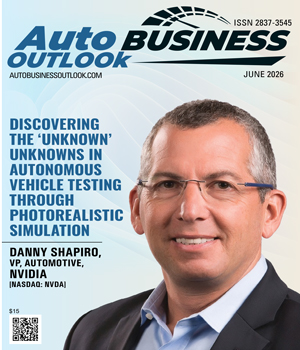
Discovering the 'Unknown' Unknowns in Autonomous Vehicle Testing Through Photorealistic Simulation
Self-driving cars have the ability to dramatically improve road safety while also giving people the freedom of mobility. However, to ensure safe deployment in the near term, self-driving vehicles will require a unique approach to augment traditional methods of vehicle testing. It’s impossible for current autonomous vehicle test fleets to encounter the rare and dangerous scenarios or extreme conditions necessary to train a self-driving car to safely handle the real world. For example, a small child wearing dark clothing running out in the street at night time. It’s not a common scenario that can be repeatedly tested, but it’s one that a self-driving car needs to be able to safely and properly react to. What’s more, current physical vehicle testing can’t validate at a large enough scale—it’s limited and a costly endeavor for companies working on AVs. Through advances in artificial intelligence and accelerated computing, simulation has emerged as a way to safely test and validate self-driving technology before it takes to the streets. Leveraging a virtual AV test fleet in the cloud, operating on an open, bit-accurate solution can help enable the development and validation of AVs at scale without putting others on the road in harm’s way. This allows for greater efficiency, cost-effectiveness and most importantly, safety, than what’s achievable with real world test drives. “Through advances in artificial intelligence and accelerated computing, simulation has emerged as a way to safely test and validate self-driving technology before it takes to the streets” There are a number of companies working on simulation for the automotive industry. At NVIDIA, we’ve developed a high-fidelity simulation tool that leverages the computing horsepower of two different servers, making it capable of generating billions of qualified miles of AV testing. The first server runs software to simulate a self-driving vehicle’s sensors (cameras, radar and L
Auto Finance
Many consumers accept dealership financing for convenience, often without fully evaluating the long-term cost and other factors. iLending, a U.S. based auto loan refinancing marketplace, who is celebrating 20 Years in business, focuses on revisiting these loans when financial conditions improve, helping borrowers restructure them for better outcomes. Vehicle payments are frequently among the largest recurring household expenses, second only to housing. By refinancing existing loans through its national network of lenders, iLending reports that customers save an average of about $148 per month, though actual savings vary by borrower profile. In a persistently elevated rate environment, many borrowers are re-evaluating debt obligations more actively. Refinancing can reduce monthly payments, lower interest costs, or both, particularly for consumers whose credit profiles or financial positions have improved since their original loan. A Structured, Advisory Approach iLending is not a direct lender; instead, operates as a marketplace connecting borrowers with banks, credit unions, and other financial institutions nationwide, whom compete for the opportunity to serve iLending clients with new auto loans. Each borrower is paired with a Loan Consultant who reviews current loan terms, payment structure, vehicle details, and financial goals. Technology is utilized to help match borrowers with suitable lender programs, while the Consultant guides final decision-making to align outcomes with borrower priorities and needs. “No two borrowers are the same. We focus on understanding each person’s goals and guiding them to a solution that meaningfully improves their financial position.” says Nick Goraczkowski, President. Expanding Access to Better Loan Options iLending differentiates itself from traditional refinancing models by evaluating offers from multiple lenders simultaneously, enabling competitive pricing across a broad network rather than limiting borrowers to a single institution..

Auto Transport Company

For a company that ships over 250,000 vehicles annually to all 50 states, a 4.7-star customer rating doesn’t come by chance. This is a result of the excellent customer service that Montway Auto Transport has delivered for nearly two decades. A leading automotive logistics company for nearly two decades, Montway Auto Transport has woven the principle of providing superior customer experiences into every aspect of its service. A fully licensed and insured broker working with an extensive network of over 16,000 carriers nationwide, Montway’s Net Promoter Score is 75, nearly double the industry average. To exceed customer expectations, Montway carves a new path. The company prioritizes employee satisfaction, and places the right people in the right roles, fostering a strong culture. Every team member is highly motivated and goes out of their way to meet and surpass customer requirements. “We know that exceptional customer service starts with exceptional employees,” says Tom Gartland, Chairman and Chief Executive Officer. “Our people are the cornerstone of our organization. We invest in their development, growth, and well-being, empowering them to deliver the best possible experience for our customers.” Full-Service Solutions for Vehicle Logistics Needs Montway provides seamless vehicle logistics for both individual customers and businesses. In the business-to-business (B2B) sector, Montway stands out by adapting to each client’s unique needs. The company provides a highly personalized service model to clients of all sizes, from independent and franchise dealer groups, to auction houses, auto manufacturers, financial institutions, rental car agencies, and fleet management companies. This consistent, top- tier service is achieved through a powerful blend of people and advanced technologies. For its retail customers, Montway provides a 5-star experience on every shipment, from local moves to cross-country relocations. This level of service is defined by transparent pricing, respectful communication, and reliable pickup and delivery through a network of licensed and insured carriers. Montway has also been the first to market with innovative solutions, like its online rate calculator. Customers can enter the make and model of a vehicle along with location zip codes to receive an instant quote, making auto transportation convenient and hassle-free.
Auto Processing Company
Automotive supply chains are rarely predictable. Weather delays, port congestion, regulatory changes, or sudden volume spikes can disrupt production and delay dealership deliveries. Each delay sends ripples through the entire network. OEMs face this pressure daily and need more than just a service provider—they need a flexible, fast-moving partner who understands every link in the chain and can adapt in real time to keep vehicles moving without interruption. AMPORTS steps in as more than a logistics provider—assuming full care and custody of every vehicle the moment it arrives, treating each one as its own, and guiding it through every phase until delivery. The company processes, stores, and transports vehicles for major OEMs across North America. It inspects, accessorizes, and prepares vehicles arriving by ship, truck, or rail, ensuring that each one reaches the dealership in perfect condition. Every vehicle undergoes a full inspection. If the automaker requests additional services such as accessory installation or minor bodywork, the vehicle is routed to the appropriate facility. Cars are stored securely until cleared for delivery, then transported via coordinated truck or rail solutions. “We provide detailed data tracking, so manufacturers know where every vehicle stands in real time,” says Vee Kachroo, CEO. Amports’ operations span 13 strategically located facilities across the U.S. and Mexico, all with direct access to highways and rail. The company is certified to perform technical services for manufacturers like GM, VW, and Stellantis, and is trusted to do so at scale. With over 1,500 acres of operational space, Amports can absorb shipment surges, buffer against port disruptions, and hold inventory when vehicles are rerouted or delayed. The company has also expanded into adjacent services such as intermodal logistics and stevedoring, assuming greater responsibility within the supply chain so OEMs don’t have to manage multiple vendors. A standout example is Amports’ heat treatment program for vehicles bound for Australia and New Zealand. These countries have strict biosecurity laws prohibiting the entry of seeds, insects, or organic debris. Amports heat-treats vehicles to kill potential contaminants, vacuums underneath, and inspects every panel to ensure compliance. This helps automakers avoid costly delays or rejections upon arrival.
E-Mobility

Innovative Technologies that Solve Unique Needs of Electric Vehicles & Full-Size Trucks
Robin Milavec, President, Executive Board Director, Chief Technology Officer & Chief Strategy Officer, Nexteer Automotive [HKG: 1316]
Packaging
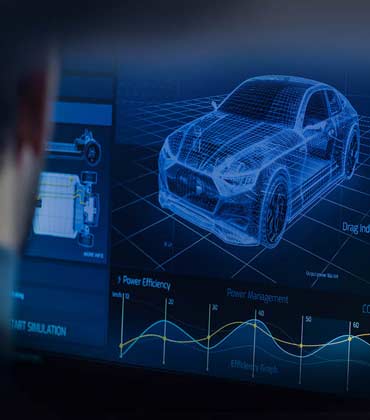
Designing and Collecting Automotive Supply Chain Packaging for Recycling
Kellen Mahoney, Executive Director, Magna International
Auto Repair
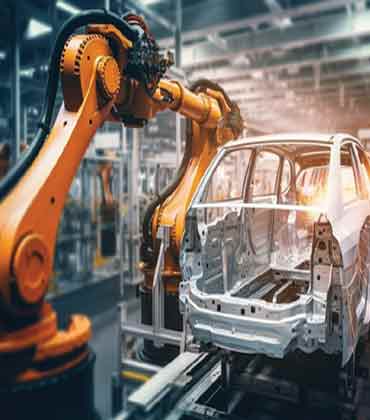
Reforming Conventional Practices in the Automotive Space
Reese Blalock, Director of Automotive Technical Education and Development, AAMCO Transmissions and Total Car Care
Car Care Products

Success Strategies for Automotive Sales
David Bailey, Senior Sales Development Manager, Edmunds
Car Care Products

Accelerating Innovation, Impact and Leadership in Automotive
Hiba Yazbeck, Head of Finance and Accounting, MAHLE
Automotive Equipment
Powering Reliability Through Service
Kevin Tidwell, Director of Aftersales Operations, Holman
Automotive Marketing

Building Automotive Growth Through People and Brand
Fabryce Kutyba, Vice President of Sales and Business Development, Meyers Manx

IN MY OPINION
Automotive Marketing
Enabling More Efficient Hybrid Architectures Through Material Innovation
Brian Baleno, Director, Global Business Development & Program Management, Syensqo [EBR: SYENS]

LAST WORD
Auto Repair
Mobility in Space for the Development of a Space Economy
Stef Crum, CEO & Co-Founder, Reditus Space
IN FOCUS

Navigating the Challenges of the Modern Auto Repair Industry
Auto repair services face challenges driven by technology, workforce shortages, rising costs, and changing customer expectations. Shops must modernize, train staff, and streamline operations to stay competitive.
Trends Transforming the Automotive Aftermarket
Some prominent trends in the automotive aftermarket industry include rising demand for advanced replacement parts, a growing shift toward digital service platforms, and a focus on sustainability.
EDITORIAL
The Industry Shift Toward Smarter Mobility Solutions
The automotive sector is navigating a transition defined not only by electrification, but also by affordability, operational efficiency and evolving consumer expectations. In this edition of Auto Business Outlook, we examine how companies across the ecosystem are responding with practical solutions that address financial flexibility, engineering complexity and long term mobility infrastructure.
iLending, recognized as the Top Car Refinancing Services 2026, reflects the growing importance of consumer-focused financial restructuring in the automotive market. The company has built its position around helping borrowers refinance existing auto loans through a nationwide lender marketplace, supported by advisory driven loan consultation and a soft-credit prequalification model. By focusing on payment reduction, lender competition and broader borrower accessibility, iLending has positioned refinancing as a practical financial management tool during a high-rate lending environment.
In the CXO Insights section, Brian Baleno, Director, Global Business Development & Program Management at Syensqo, examines how material innovation is enabling more efficient hybrid vehicle architectures. He highlights the growing importance of lightweighting, thermal management and system-level integration as automakers balance electrification goals with packaging and efficiency constraints across hybrid platforms.
Stef Crum, CEO & Co-Founder of Reditus Space, expands the mobility discussion beyond terrestrial transportation, outlining how accessible in-space infrastructure and logistics networks will shape the next phase of the global space economy. His perspective emphasizes how affordability, accessibility and transportation infrastructure remain central to enabling large-scale economic ecosystems, whether on Earth or in orbit.
Together, the companies and leaders featured in this edition demonstrate how the future of mobility will be shaped by disciplined execution, infrastructure readiness and practical innovation. We invite readers to explore the insights presented throughout this issue and engage with the ideas redefining automotive and mobility ecosystems for the years ahead.
